
Institutional Framework
Courts & Jurisdiction
Tracing the jurisdictional evolution across India's highest judicial institutions.
Institutional Framework
Tracing the jurisdictional evolution across India's highest judicial institutions.
Judicial Hierarchy

Detailed Overview
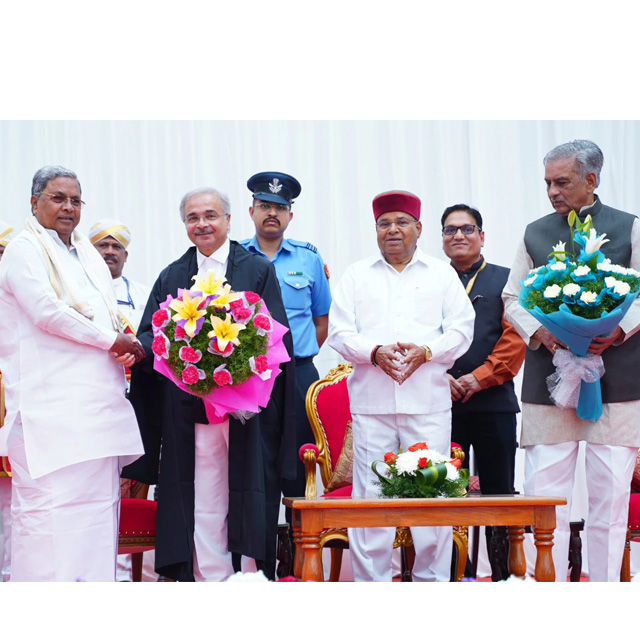
As a Judge of the Supreme Court of India, Justice Anjaria adjudicates matters of constitutional significance, hears appeals from High Courts across the country, and contributes to the development of binding legal precedent that shapes the nation's jurisprudential landscape.
The Supreme Court serves as the final arbiter of constitutional interpretation, the guardian of fundamental rights, and the ultimate appellate authority in India's judicial system. Justice Anjaria's presence on this bench adds intellectual depth and judicial precision to its deliberations.
Judge
As Chief Justice of the Karnataka High Court, Justice Anjaria led one of India's most significant constitutional courts. The Karnataka High Court, with jurisdiction over the state of Karnataka, handles a vast array of constitutional, civil, and criminal matters.
During his tenure as Chief Justice, he oversaw judicial administration, allocation of cases, and the efficient functioning of the court. His leadership was characterised by a focus on institutional integrity, timely disposal of cases, and the promotion of access to justice.
Chief Justice
Justice Anjaria served as a Judge of the Gujarat High Court, where he developed his judicial craft and established a reputation for analytical rigour and principled decision-making. The Gujarat High Court, exercising jurisdiction over the state of Gujarat, is one of India's historically significant constitutional courts.
His tenure at the Gujarat High Court saw significant contributions across constitutional law, civil disputes, and administrative governance, laying the foundation for his subsequent elevation to Chief Justice and later to the Supreme Court.
JudgeJurisdictional Range