
Digant Sharma
Cultural and Heritage Ambassador
View Full Profile →
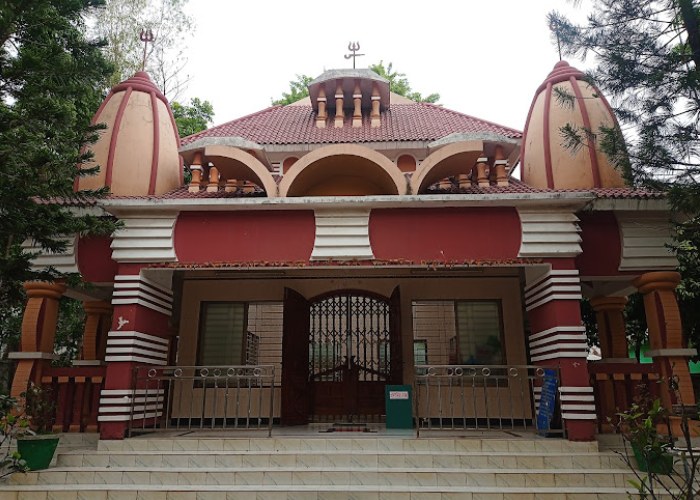
An eternal seat of the Devi — where mythology, history and unbroken devotion converge upon the soil of Sylhet.
The story of Shri Shri Mahalakshmi Bhairabi Griba Maha Peetha reaches back to the deepest stratum of Hindu sacred memory. In the Puranic and Tantric traditions, the Shakta Peethas are said to have arisen at the very places where the divided body of Goddess Sati descended upon the earth — each fragment transforming the ground into a luminous portal of divine presence. At this seat, it is the Griba, the sacred neck of the Mother, that fell — and from that moment the village of Joinpur in Dakshin Surma became one of the most venerated Shakta centres of the subcontinent.
For centuries the Peetha has been honoured by yogis, ascetics, royal patrons and humble villagers alike. Pilgrims have travelled long roads, crossed rivers and borders, to bow at the sanctum where the Mother is invoked as the radiant Mahalakshmi, and where Her Bhairav — Sambaranand — stands as the eternal guardian of the seat.
“Wherever the limbs of the Mother fell, the earth itself awoke as a Peetha — a place of unconditional refuge, of unbroken grace.”
The legend begins with the celebrated yajna of Daksha. When Sati immolated Herself in protest at the dishonour shown to Lord Shiva, the Lord wandered the cosmos in unbearable grief, bearing Her form upon His shoulder. To return the world to balance, Lord Vishnu released the Sudarshana Chakra, which gently divided the Goddess's body. As each fragment fell, the soil at that spot was sanctified for all time — and a Peetha was born. Among these, the descent of the divine neck at Joinpur consecrated this very land as a Maha Peetha.
In the Shakta scriptures the neck is no ordinary limb — it is the channel of the breath, the seat of the sacred sound, the throat from which arises the primordial syllable. To worship at the Griba Peetha is to bow before the very source of mantra. It is here that pilgrims are reminded that the Mother is not distant: She is the living vibration of every prayer offered at Her seat.
At this Peetha, the Devi is invoked as Mahalakshmi — bestower of shri, the auspicious flowering of life. She is not only the Lakshmi of material prosperity, but the deeper grace that unifies household, community and inner discipline. Her worship here follows the steady rhythm of Shodashopachara — the sixteen offerings — performed at dawn, midday and dusk.
Every Shakti Peetha is consecrated by the eternal pairing of Devi and Bhairav. Here the Bhairav is Sambaranand — He whose name means the bliss born of restraint. He guards the threshold of the sanctum: a fierce protector of the Devi's grace, a stern teacher of the wandering mind. To honour Sambaranand is to leave behind the noise of the world, and only then to enter the silence in which Mahalakshmi reveals Herself.
The Peetha rests at Joinpur village, near Gotatikar, three kilometres south-east of Sylhet town in the Dakshin Surma upazila of Bangladesh. Sylhet itself is one of the oldest spiritual landscapes of South Asia — a land of saints, scholars, sacred rivers and a deep folk-religious imagination. The Peetha is the radiant heart of this older inheritance.
In the present day the Peetha continues as a living sanctum. Daily rituals, festival cycles and pilgrim assemblies preserve the unbroken thread of worship. Devotees from Bangladesh, India and across the Indo–BIMSTEC region arrive at its threshold throughout the year, drawn by both the deep spirituality of the seat and the heritage significance of the place.
Distinguished cultural ambassadors and nation-builders entrusted with carrying this sacred heritage into the modern era.