Heritage & History
The Sacred Inheritance
of Sylhet and Bengal
The deeper civilisational story in which the Griba Maha Peetha is held — a heritage of unbroken devotion, scholarship and shared spiritual memory.
The deeper civilisational story in which the Griba Maha Peetha is held — a heritage of unbroken devotion, scholarship and shared spiritual memory.
Long before modern boundaries were drawn, the land we know today as Sylhet was a luminous quarter of the Bengali sacred world. Bounded by hills, rivers and dense forest, it nurtured a remarkable civilisation that braided together Vedic ritual, Tantric practice, Vaishnava devotion and folk Goddess worship. Across centuries, Brahmin pandits, wandering yogis, courtly patrons and humble peasants all wove their lives into a single fabric — and the Peethas of the region were the bright threads at its heart.
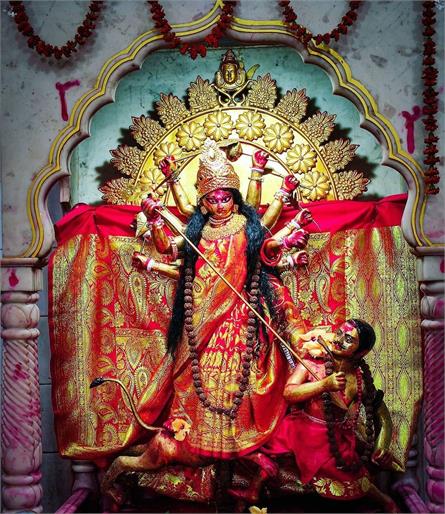
The ancient name of the region, Srihatta, itself contains the word shri — auspicious abundance. Local tradition holds that the very name was conferred on this land in honour of Mahalakshmi, the Devi who graces the seat at Joinpur. Whether or not that derivation is accepted in every learned reading, the spiritual association is unmistakable: Sylhet's identity is bound to the Mother.
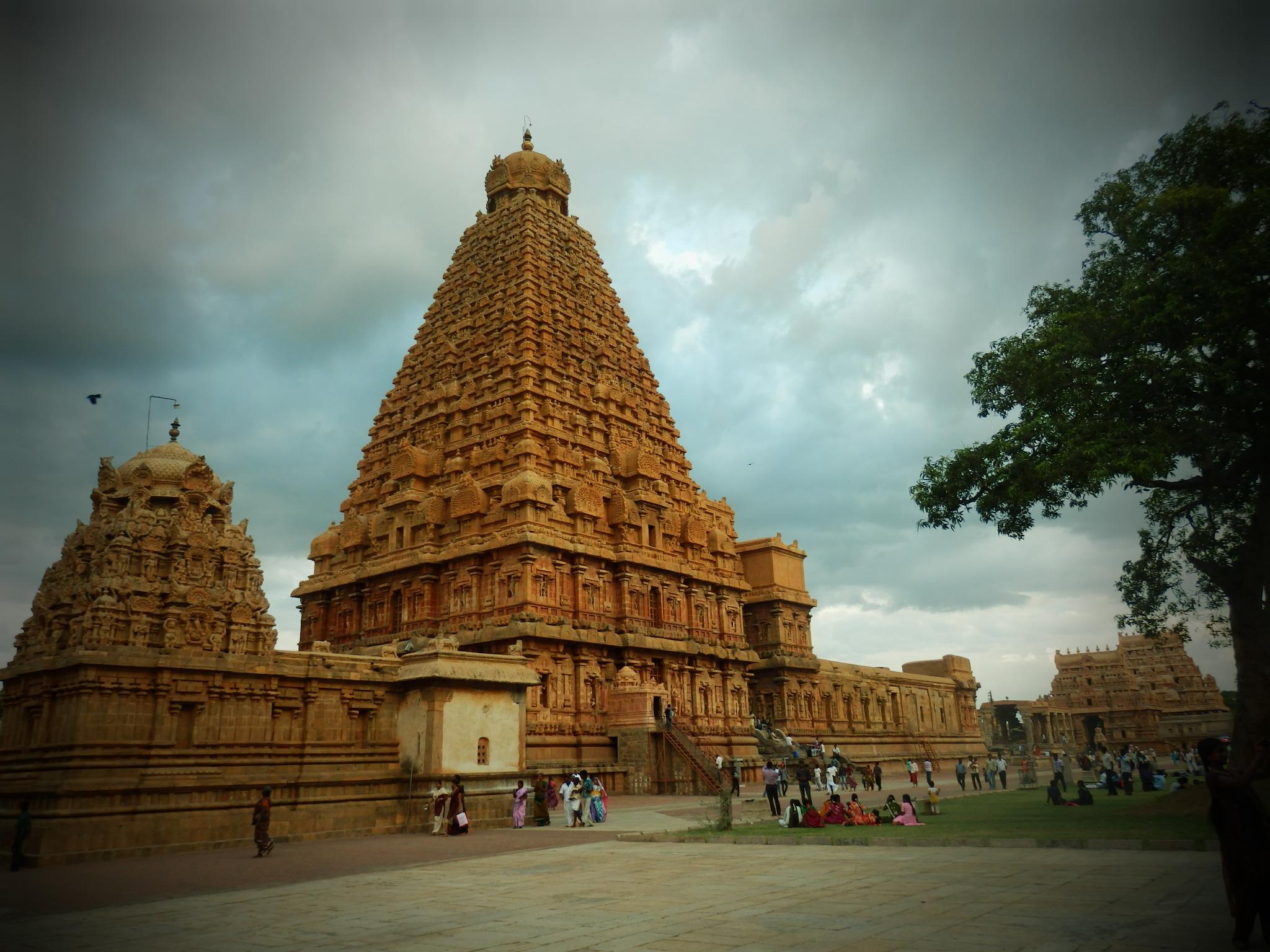
The temples and Peethas of present-day Bangladesh — Chittagong's Chandranath, Sylhet's Mahalakshmi Bhairabi, Dhaka's Dhakeshwari, Barisal's Shri Sugandha — together form a sacred constellation that has sustained the spiritual life of eastern Bengal for centuries. They have served as centres of worship, but also of learning, music, manuscript preservation and social welfare.
In times of upheaval these shrines have been quiet anchors of continuity. Communities have gathered at their courtyards to hold memory, to teach the next generation, and to keep alive the unbroken cadence of mantra, lamp and bell. To enter these shrines today is therefore to step into a long, lived history.
Generations of priests, devotees and cultural custodians have carried this seat forward.
Mention in Shakta texts and local Mahatmyas; recognition as one of the Peethas where the Mother's body descended. Pilgrimage routes converge upon the seat.
The Sylhet region flourishes as a centre of Bengali Shakta poetry, Tantric scholarship and royal patronage of temples — the Peetha is sustained through community endowments.
The Peetha endures through the changing tides of history — preserved by devoted families, custodian priests and the quiet continuity of daily worship.
Recognition as a heritage site within the broader Indo–Bangladesh cultural cooperation framework — drawing pilgrims, scholars and youth delegations from the wider region.
Ongoing initiatives to document, preserve and gently restore temple architecture, archive its history, and equip the site to serve the next generation of devotees.
Programmes to engage youth, scholars and visitors from across BIMSTEC nations — strengthening shared civilisational memory and cross-border spiritual ties.
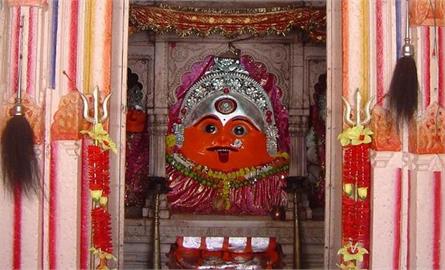
The Mahalakshmi Bhairabi Griba Maha Peetha is far more than a regional shrine. It is one of the deepest threads that binds the spiritual histories of India and Bangladesh. For pilgrims arriving from Kolkata, Tripura, Assam or further afield, the seat at Sylhet is not a foreign destination — it is a continuation of a single sacred geography.
In an era when neighbours seek to rediscover the cultural foundations of their friendship, the Peetha stands as a place where civilisational memory speaks more clearly than any treaty. To worship at the seat of the Mother's neck is to recognise that the deepest bonds among the peoples of the eastern subcontinent are not new — they are old as the chant itself.
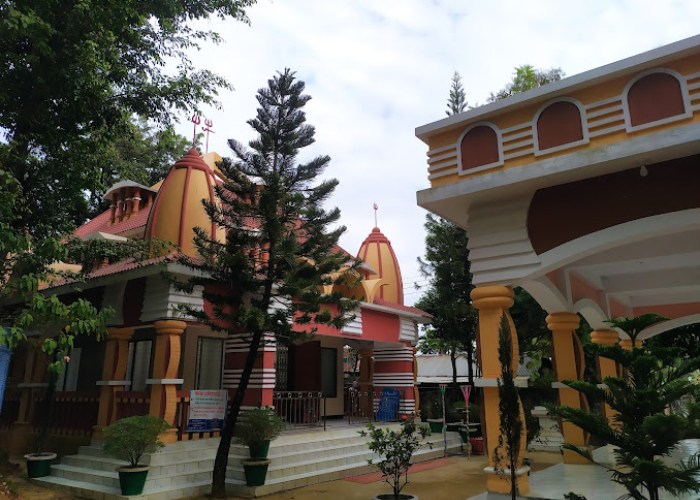
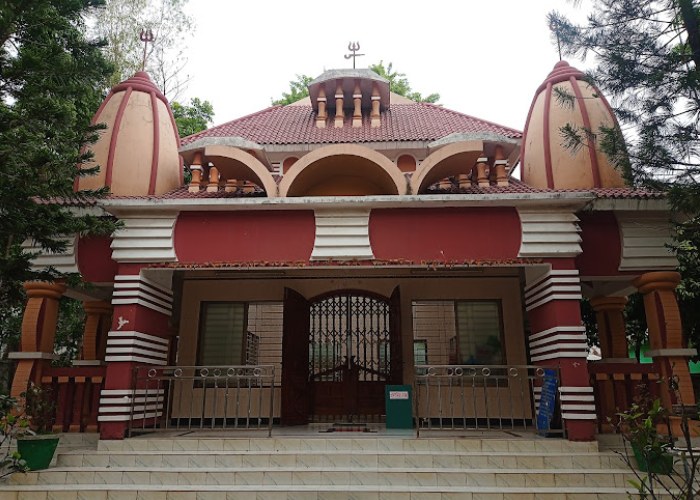
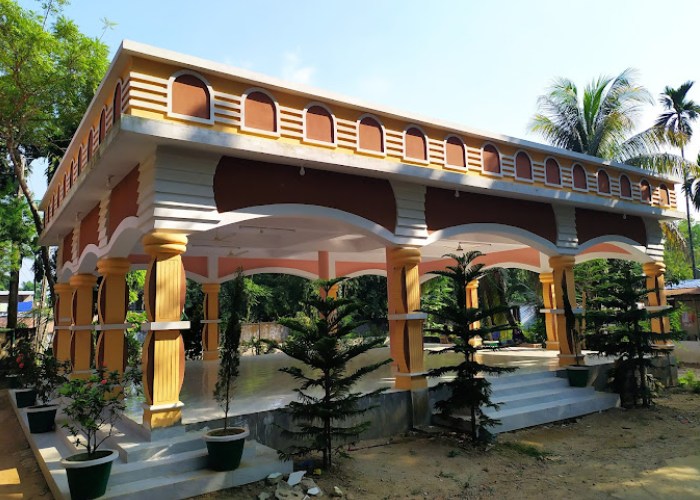
The Peetha rests in the Dakshin Surma upazila — south of the Surma river, in the verdant alluvial belt that has long sustained the rice-and-fish civilisation of eastern Bengal. The geography itself is a study in tirtha: the river marks the boundary, the village holds the shrine, the gentle hills frame the horizon. Together they create a contained, contemplative landscape — exactly the kind of geography that the older texts considered ideal for the consecration of a Peetha.
The conservation of ancient temples is among the most urgent cultural concerns of our age. Iconography, stone, manuscripts, ritual lineages and oral tradition all require care. The Peetha's stewardship is committed not merely to maintaining the structure of the temple, but to nurturing the entire ecosystem of devotion, scholarship and community that surrounds it. Heritage, in this view, is not a museum but a living continuity.