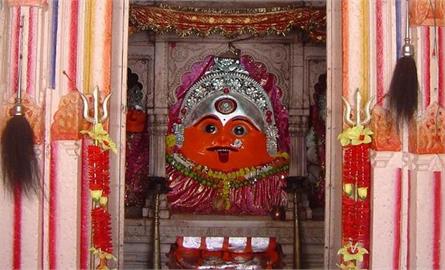
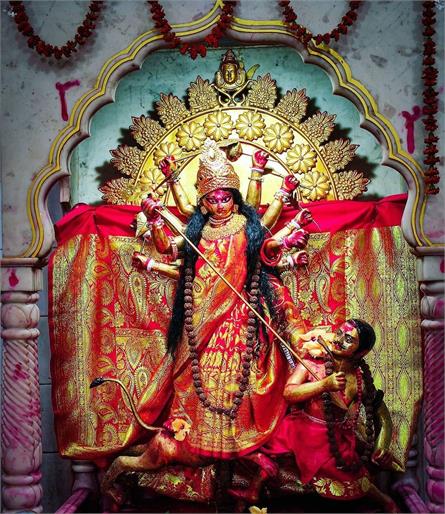
Sacred sanctum of the Devi
Spiritual Significance

The Eternal Meaning of
the Griba Maha Peetha

A meditation upon mythology, scripture and the unbroken Shakta tradition that consecrates this sacred seat.

Shakti Peethas

What is a Shakti Peetha?

A Shakti Peetha is one of the holiest geographies of the Hindu world — a place where the Goddess is not merely worshipped but is believed to reside in living form. The Peethas trace their origin to the cosmic moment in which Goddess Sati's body, divided by Vishnu's Sudarshana Chakra, descended upon the earth in fragments. Wherever a fragment fell, the soil itself awakened as a sacred portal, a Peetha.

The traditional reckoning includes 51 principal Peethas across the subcontinent — from Kamakhya in Assam to Hinglaj in Balochistan, from Avanti in Madhya Pradesh to the Dakshin Surma seat at Sylhet. Each Peetha is associated with a particular limb of the Mother, a particular form of the Devi, and a particular Bhairav. Together, the Peethas form a sacred map of the Mother's living presence on earth.

“To approach a Peetha is to approach the Mother Herself — for the place itself has become Her body.”

Why the Griba Maha Peetha is Sacred

The Descent of the Sacred Neck

At Joinpur, in Dakshin Surma, the divine Griba — the neck of Sati — descended. In the symbolism of the body, the neck is the bridge between heart and head, the channel of breath, the throne of the throat-centre (Vishuddha Chakra) from which the primordial sound arises. To worship at the Griba Peetha is to bow before the very source of mantra, before the breath that animates the cosmos. A Peetha of the neck is, therefore, a Peetha of vak — sacred speech — and of swara — sacred sound. Pilgrims have long believed that prayers uttered here carry a special weight, returning whole to their origin.

The Story of Sati and Shiva

The mythology begins at Daksha's grand yajna. Daksha — proud, ritualistic, and disdainful of his ascetic son-in-law — failed to invite Lord Shiva. Sati, His consort, attended the yajna against Shiva's counsel. Wounded by the dishonour shown to Her Lord, She surrendered Her form to the sacred flame. When Shiva learned of this, the cosmos itself shook. The Lord lifted Sati's body upon His shoulder and wandered the worlds in unspeakable grief, performing the Tandava of dissolution.

Lord Vishnu, witnessing the threat to cosmic order, released the Sudarshana Chakra. The Chakra gently divided the Goddess's body into fragments. Wherever a fragment touched the earth, the soil rose to receive Her — and a Peetha was born. Among these is the seat at Joinpur, where the Mother's neck descended.
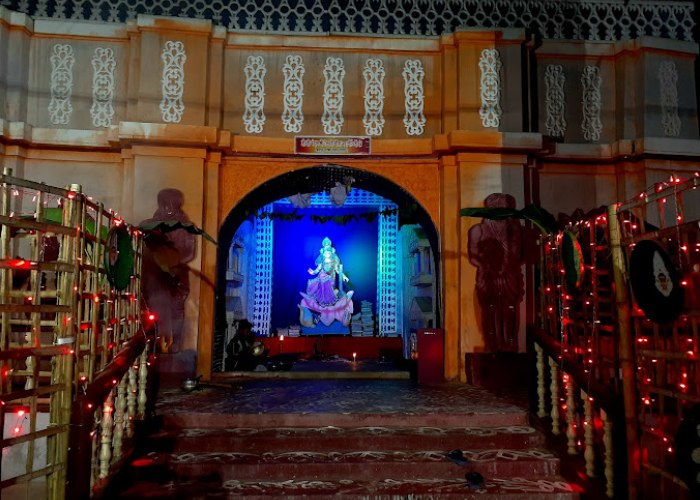
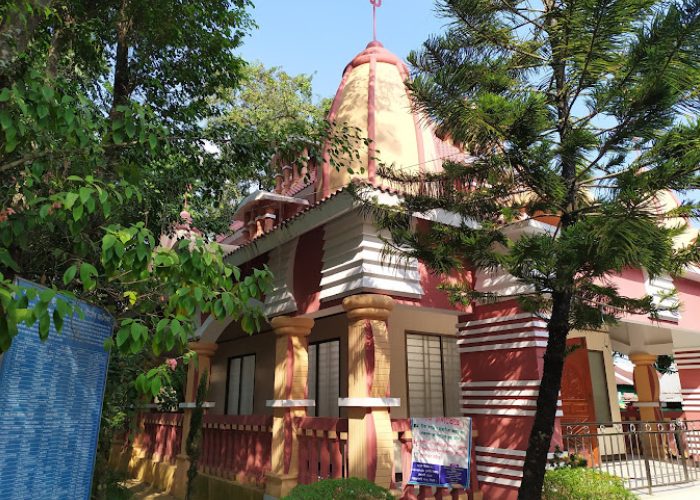
The inner shrine of the Devi
Symbolism of the Griba

Why the Neck is Sacred

In Tantric and Yogic anatomy, the throat-centre is the Vishuddha Chakra — the centre of purification. It is here that the breath becomes speech, that thought becomes sound, that silence ripens into mantra. The neck is also the meeting-place of head and heart, the bridge of intellect and feeling.

When the Griba of the Mother fell upon the earth, this terrain was consecrated as the Vishuddha of the subcontinent — a place of clarification, where the inner noise of the seeker is quieted and the deeper sound of grace becomes audible.

For this reason, the Griba Maha Peetha has long been associated with the cultivation of satya-vacha — truthful speech, vow-keeping, sincerity — and with all forms of sacred utterance: chanting, reading, singing of bhajans, and the recitation of stotras.

Devi · Bhairav

Mahalakshmi and Sambaranand

Mahalakshmi form of the Devi
The Devi

Mahalakshmi · The Auspicious Mother

At this Peetha the Goddess is worshipped as Mahalakshmi — She who is the source of all shri: prosperity, well-being, dignity, household harmony, the sweetness of disciplined effort, and the gentle wealth of the soul. She is invoked at dawn, midday and dusk through offerings of flower, lamp, grain, sandal-paste and the chanting of Her stotras.

Her presence at the Griba seat is especially potent: She unites the abundance of the outer world with the auspicious sound of the inner mantra. To pray to Her here is to ask not for wealth alone, but for the wholeness in which wealth becomes blessing.

Bhairav form
The Bhairav

Sambaranand · The Bliss of Restraint

No Shakti Peetha is complete without its presiding Bhairav. Here that guardian is Sambaranand — He whose name carries two truths: sambara, the restraint of the wandering senses, and ananda, the bliss that emerges when the senses are stilled.

Sambaranand stands at the threshold of the sanctum. He is fierce only towards ego, fear and confusion. To devotees who approach with sincerity, He is the guardian of the path. Without His blessing, the Devi's grace cannot be received cleanly. With His blessing, the noise of the world falls away, and the heart turns naturally towards the Mother.

The Living Worship

Rituals and Pilgrimage Importance

Daily Abhishekam

The sacred image of Mahalakshmi is bathed in pure water, milk, honey, curd and ghee at the Brahma Muhurta — the auspicious hour before dawn.

Three Aratis

Camphor and ghee lamps are offered at dawn, midday and dusk — the three doorways through which the Devi's grace enters the day.

Stotra Recitations

The Sri Sukta, Lakshmi Ashtottaram and Devi Mahatmyam are chanted regularly, especially during Navaratri and Lakshmi Puja.

Bhairav Worship

Sambaranand is honoured at twilight with offerings of incense, lamp and a brief recitation of the Bhairavashtakam.

Pilgrim Vrata

Devotees frequently undertake a vrata — a vow of fast or silence — for one to seven days while resident at the Peetha.

Mahotsavas

Annual celebrations of Navaratri, Lakshmi Puja, Maha Shivaratri and Vasant Panchami draw devotees from across the region.

Scriptural Relevance

The Texts that Hold this Seat

The Griba Maha Peetha is referenced in the wider Shakta corpus that includes the Devi Bhagavata Purana, the Kalika Purana, the Pithanirnaya Tantra and the regional Mahatmyas of Eastern India. These texts list the principal Peethas and their associated body-parts, Devi-forms and Bhairavas. The seat at the village near Sylhet is preserved within this stream of memory as the place of the Mother's sacred neck.

Beyond the named Peetha-listings, the spiritual significance of the place is also held in the regional bhakti traditions — in Bengali Shakta poetry, in folk Lakshmi-songs sung in Sylheti households, and in the everyday devotional life that surrounds the temple even today.

“Where the limbs of the Mother fell, no exile is possible — for the Mother Herself is the homeland.”