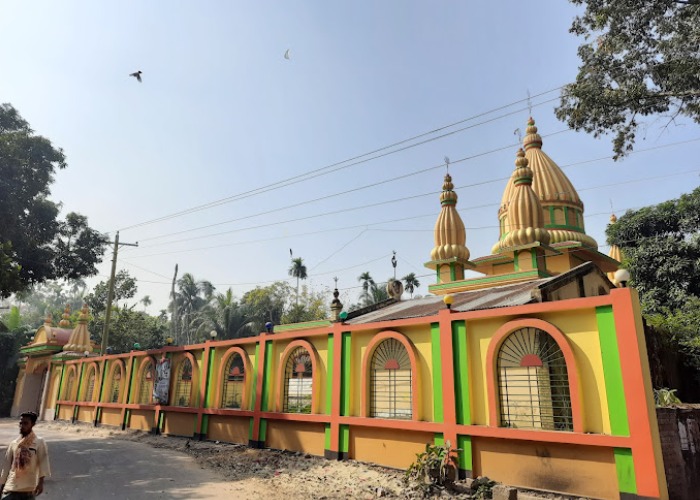
Sugandha Shaktipeeth — known in Bengali as সুগন্ধা শক্তিপীঠ — stands quietly in the village of Shikarpur, approximately ten miles north of Barisal in southern Bangladesh. It is one of the most venerated of the fifty-one Shakti Peethas: the sacred sites where, according to Puranic tradition, the body of Goddess Sati is said to have descended to the earth, sanctifying the soil for all time.
"Each Peeth is not merely a place — it is a presence. To stand at Sugandha is to enter a continuum of devotion that has flowed unbroken through generations."
The temple is dedicated to Devi Sunanda, a luminous and graceful manifestation of Adi Shakti, attended in this Peeth by the protector deity Bhairava Tryambaka. The name "Sugandha" — fragrance — is itself the name of the river beside which the temple rests, and a poetic reminder that this is a place where land, water, and the sacred are inseparable.
Importance Among the Shakti Peethas
Within the network of the 51 Shakti Peethas, Sugandha is associated with the descent of the nose of Goddess Sati — a part of her body that, in the Tantric and Puranic schema, signifies refined perception, presence, and the breath of life. This places Sugandha among the few Peethas of the eastern Bengal region that hold deep cosmological significance, alongside Kalighat, Kamakhya, and others.
Why Sugandha is Sacred
For the devotee, Sugandha is sacred not only because of its mythological origin, but because of the quality of stillness it offers. The shrine — modest, white, edged in crimson — sits in a setting of rice fields, mango groves, and the soft motion of the river. Pilgrims have written, across centuries, of an unmistakable peace that descends here at dawn aarti.
Devotion to Goddess Sunanda
Sunanda Devi is invoked as the giver of shanti — peace — and of kripa — the grace that arrives quietly. Her form is gentle, motherly, and luminous, and her worship at Sugandha integrates classical Shakta traditions with the folk devotional patterns of southern Bangladesh.
Role in Regional Spiritual Tradition
Sugandha is part of a wider sacred geography that connects the Bengal region to the deeper history of Shakta worship across India and the subcontinent. Local mendicants, scholars, and householders alike have long preserved its rituals — often through periods of difficulty — making the temple a continuous thread in the spiritual life of the region.
Significance for Pilgrims
For modern pilgrims arriving from India, Bangladesh and beyond, Sugandha offers something that the larger urban temples cannot — proximity to source. The journey itself is part of the prayer: the slow road through the southern delta, the river crossings, the welcome of the village, the first sight of the temple's white walls glowing in the early light.
Present-Day Worship & Preservation
Today the Peeth is maintained by a tradition of dedicated priests and supported by devotees, scholars and cultural patrons committed to its careful preservation. Annual festivals, daily aarti, and the ongoing welcome of pilgrims keep the temple alive — not as a relic, but as a living, breathing sanctuary.