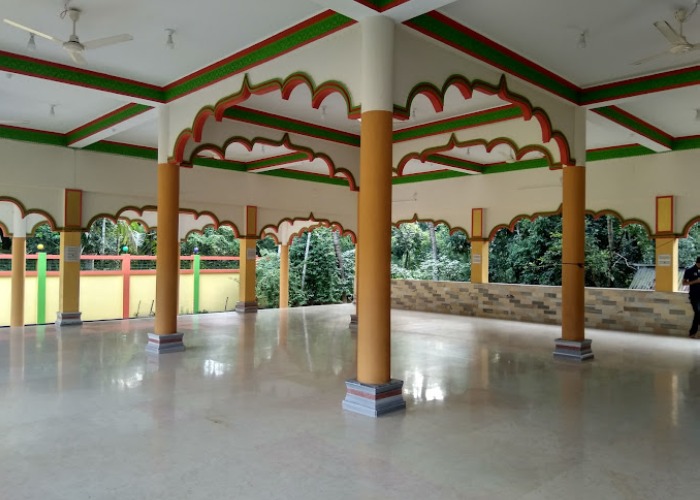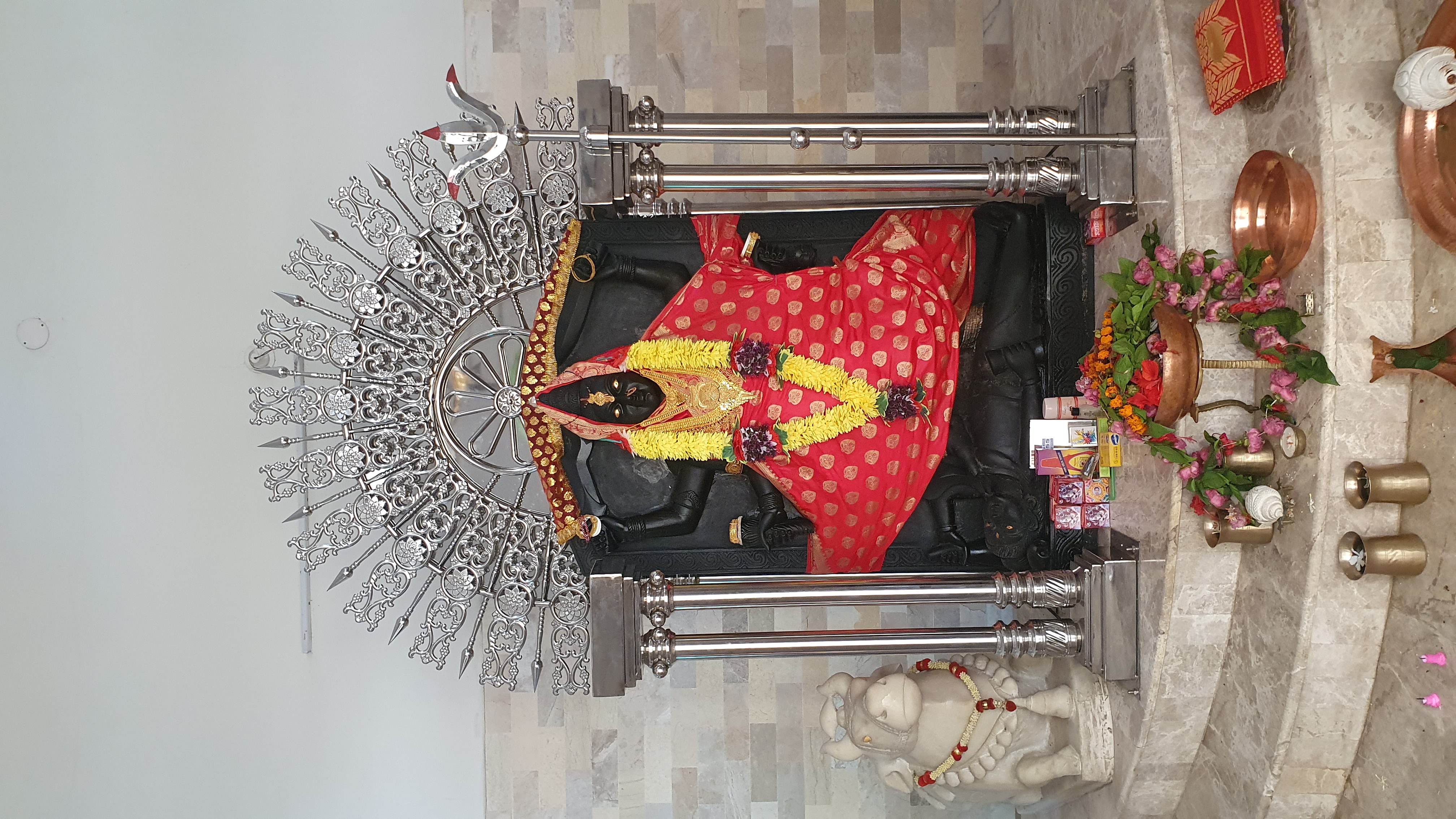
The story of Sugandha Shaktipeeth — like that of every one of the fifty-one sacred Peethas — begins with one of the most poignant narratives in the Puranic tradition: the self-sacrifice of Goddess Sati, daughter of Daksha Prajapati and consort of Lord Shiva.
The Story of Goddess Sati
King Daksha, having organised a great yajna, deliberately did not invite his daughter Sati nor her husband Shiva. Sati, undeterred and seeking to honour her parents, attended the sacrifice uninvited. There she was met not with welcome but with insult — her husband publicly disrespected before the assembled gods and sages.
Unable to bear the dishonour shown to Shiva, Sati cast her body into the sacred fire. Her loss shook the cosmos. Shiva, seized by inconsolable grief, lifted her body upon his shoulders and began the cosmic tandava — a dance whose intensity threatened the order of all creation.
To restore balance, Lord Vishnu released his Sudarshana Chakra, which gently divided the body of the Devi. Wherever a part of her descended to the earth, that place became forever sanctified — a Shakti Peetha.
The Sacred Connection of Sugandha Peeth
According to long-held tradition, it was at Sugandha — on the banks of the Sondha river in present-day Shikarpur, Barisal — that the nose of the Devi descended. In the Shakta cosmology, the nose signifies refined perception, the breath of life, and the seat of prana. To enshrine such a part of the Goddess is to consecrate a place where the very air becomes scripture.
Divine Manifestation as Devi Sunanda
The presiding form of the Goddess at Sugandha is Devi Sunanda — gentle, luminous, attentive — a form that radiates shanti (peace) and kripa (grace). She is attended in this Peeth by the protector deity Bhairava Tryambaka, a manifestation of Shiva who watches over the sanctity of the grounds.
Devi Sunanda is invoked by devotees seeking inner stillness, harmony in the household, and the quiet courage required for life's long passages. Her worship integrates classical Shakta liturgies with the folk devotional warmth of southern Bengal — a synthesis that gives the Peeth its singular emotional texture.