
Digant Sharma
Cultural & Heritage Ambassador
Entrepreneur · Social Architect · Nation-Building Strategist · Co-Founder, Bangladesh Cultural Heritage Trust.
View Full Profile →Where ancient Goddess worship, classical iconography and the unbroken faith of generations converge in the heart of Bogra, Bangladesh.
According to the Shakta tradition, the Shakta Pithas mark the sacred sites where parts of Goddess Sati's celestial form descended to earth — sanctifying the land for eternity. Bhabanipur, located in Sherpur Upazila of Bogra District, is counted among these revered sites.
Here, the Goddess is worshipped as Devi Aparna — the embodiment of austerity, grace and Shakti — alongside her divine consort. The temple has stood for centuries as a beacon of Hindu civilisational continuity across the eastern Indian subcontinent.
Beyond ritual, Bhabanipur is a place of inner stillness — a tirtha where the seeker, the devotee and the heritage traveller find a common silence.
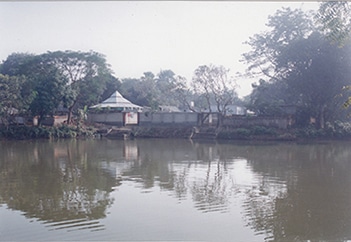
The temple's identity has been shaped by the unwavering devotion of pilgrims, the scholarship of priests, and the patronage of communities determined to preserve a sacred trust.
The classical sequence of Shakta worship — invocation, offering, abhishekam, aarti and prasad — has been faithfully observed at Bhabanipur, undisturbed by the passage of empires and seasons.
Generations of local families, priestly lineages and devotee circles have nurtured the temple as a shared spiritual home — a place where personal vows and communal festivals meet.
Devotees from Bangladesh, India, Nepal, Bhutan and the wider diaspora regard Bhabanipur as part of a shared civilisational inheritance — a Shakta tradition that transcends political borders.
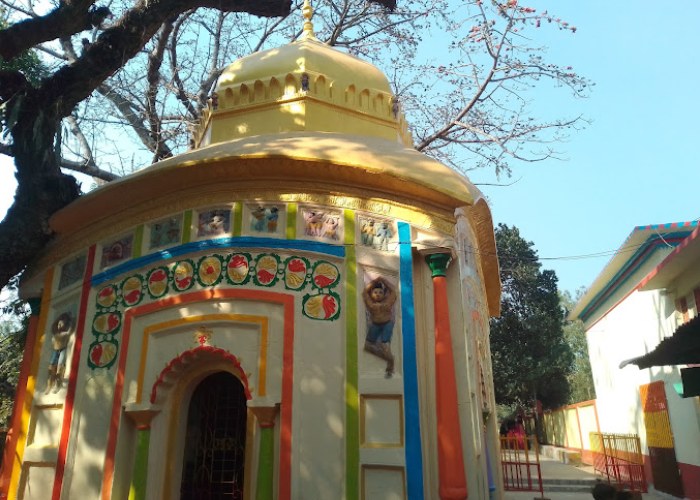
Bhabanipur sits within a remarkable cultural geography — the wider Bengal region, long known for its Shakta scholarship, devotional poetry and Goddess-centred festivals. The temple is one of the most prominent Hindu pilgrimage destinations within Bangladesh.
Its proximity to Bogra (approximately 33 km) and accessibility from Rajshahi and Dhaka have made it a key stop along contemporary heritage circuits, drawing scholars, devotees and travellers seeking continuity with the ancient Shakta cosmos.
Today, Bhabanipur stands not only as a place of worship but as a heritage asset of regional and civilisational importance — a living chapter in the shared spiritual history of the subcontinent.
Custodianship of a living Shakta Pitha demands more than maintenance — it asks for vision, scholarship, and humility before the sacred. The Bhabanipur stewardship effort weaves together temple-tradition, conservation expertise, cultural diplomacy and contemporary CSR to safeguard the temple's sanctity, fabric and continuing devotional life for generations to come.
Distinguished individuals bring decades of experience in cultural diplomacy, heritage stewardship and nation-building to the cross-border preservation of Bhabanipur.
Entrepreneur · Social Architect · Nation-Building Strategist · Co-Founder, Bangladesh Cultural Heritage Trust.
View Full Profile →
Advancing civilisational dialogue, cultural geopolitics and Indo–BIMSTEC regional integration.
View Full Profile →"She is the formless made visible, the silence made song — wherever She is enshrined, the earth becomes a temple."— Shakta Tradition