Festivals & Rituals

A Living Calendar of Sacred Devotion

From Durga Puja to Navratri, from Kali Puja to seasonal ceremonies — discover the rituals that mark the passing of every sacred year at Bhabanipur.

An Unbroken Year

The Rhythm of Worship

The temple's calendar is structured around the great Shakta festivals, the daily worship of the Goddess, and the seasonal observances that knit the wider community of devotees together. Each occasion brings its own atmosphere — from the contemplative silence of dawn aarti to the radiant celebration of Durga Puja.

Visiting during a festival is a rare privilege; the temple comes alive with light, music, ritual scholarship and the shared joy of pilgrims arriving from across the region.
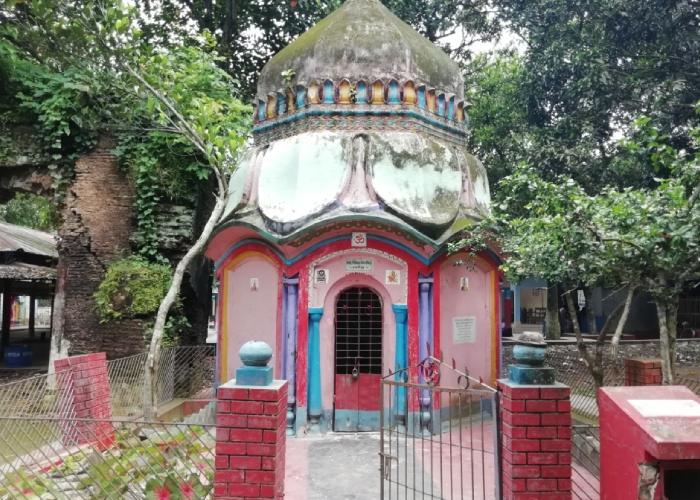
Devotees during festival worship at Bhabanipur
Sacred Calendar

Major Festivals at Bhabanipur

Timed with the lunar Shakta calendar, each celebration draws devotees from across Bangladesh, India and the diaspora.

Sep · Oct
Durga
Puja
Greatest Festival

Durga Puja — The Mother Returns

The high festival of Bengal and the most spiritually charged moment in the temple's year. Across multiple days, the Goddess is invoked as Durga — the supreme protectress — through the classical sequence of Shakta worship, scriptural recitation, and grand evening aartis.

The entire complex transforms with light, fragrance, music and the joyful presence of pilgrims, who undertake the journey to Bhabanipur as the central act of their devotional year.

Spring & Autumn
Nava-
ratri
Nine Nights of Devi

Navratri — Nine Nights of the Mother

Celebrated twice each year — in the spring (Chaitra) and autumn (Sharad) — Navratri is dedicated entirely to the Goddess in her many forms. At Bhabanipur, the nine nights see the recitation of the Devi Mahatmyam, special daily pujas, and an extended programme of ritual offerings.

Devotees observe traditional vows, undertake fasts, and attend the daily aartis, considering this period particularly auspicious for prayer and spiritual resolve.

October · November
Kali
Puja
Night Worship

Kali Puja — The Mother as Liberator

Held on the new moon night of Kartik, Kali Puja honours the Goddess in her fierce, transformative aspect — the destroyer of fear and ignorance. The temple is illuminated with countless lamps, and the night is filled with mantra, devotional song and silent contemplation.

For many devotees, this is a moment of inward turning — a recognition of the Mother's power to dissolve every limitation.

Year-Round
Bhavani
Worship
Daily & Special Pujas

Special Bhavani Worship

Beyond the major festivals, the temple observes an extensive cycle of special pujas dedicated to Devi Bhavani — including new moon and full moon observances, Tuesday and Friday devotions, and personal sankalpa pujas requested by devotees.

These offerings allow individual prayers, family observances and significant life occasions to be sanctified within the Goddess's living presence.

Annual
Pilgrim
Fair
Cultural Gathering

Annual Fair & Community Mela

An annual fair traditionally accompanies the principal festival, drawing devotees, artisans, traditional performers and traders from neighbouring regions. The mela is a vibrant intersection of ritual life, folk art, sacred music and seasonal commerce.

For the broader community, this is a moment of shared cultural celebration — anchored by the temple but reaching well beyond its walls.

Throughout the Year
Seasonal
Rituals
Year of the Mother

Seasonal Ceremonies & Vows

Seasonal rituals tied to the agricultural and lunar calendar — including harvest observances, special tithis, and communal prayers — are observed alongside personal vows undertaken by devotees on auspicious days.

Together, they make Bhabanipur not only a festival site but a year-round sanctuary of Shakta devotional life.

Community Ceremonies

Devotion as Shared Life

The temple is not only a place of personal worship — it is the gathering ground for community ceremonies that carry the rhythm of devotional life across generations.

I

Annaprashan & Mundan

Traditional life-cycle ceremonies for children — first-rice and first-tonsure rituals — performed within the sanctity of the temple precincts.

II

Sacred Vows

Personal vrata observances — undertaken for family wellbeing, healing, or spiritual progress — sanctified through temple worship.

III

Sankirtan & Bhajan

Devotional music gatherings, where traditional Shakta and Bengali Vaishnava traditions intersect through the shared language of song.

IV

Scriptural Recitation

Public readings from the Devi Mahatmyam, Chandi Path and other classical texts — particularly during Navratri.

V

Charitable Offerings

Communal feeding, prasad distribution, and seva activities organised in the temple's name across the wider community.

VI

Cultural Heritage Days

Special programmes celebrating the wider cultural heritage of which Bhabanipur is a part — drawing scholars, artists and devotees alike.

"Wherever the Mother is invoked with sincere devotion, the festival never truly ends — only its outward form changes."
— Shakta Tradition