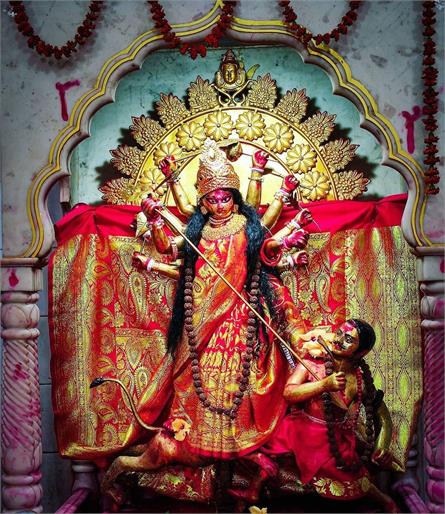
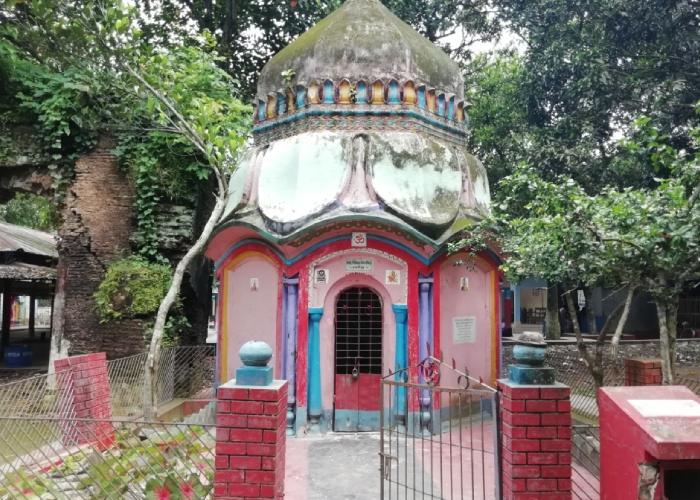
The story of Bhabanipur is the story of Shakta tradition — of how the Divine Mother sanctified the earth, and how generations of devotees safeguarded her presence here.
In the Shakta tradition, the origin of every Shakta Pitha is bound to a single, transformative cosmic event. When Goddess Sati, consort of Lord Shiva, departed her mortal form, Lord Vishnu's discus divided her celestial body, and parts descended to the earth. Each place where a fragment came to rest became a Shakta Pitha — a permanent sanctification of land.
Bhabanipur is venerated as one such Pitha. Here, the Goddess is worshipped as Devi Aparna — a serene aspect of Bhavani — and her presence is regarded as eternal and self-existing.
Through this lineage, the temple becomes not merely a built structure but a node in a living spiritual map of the subcontinent.
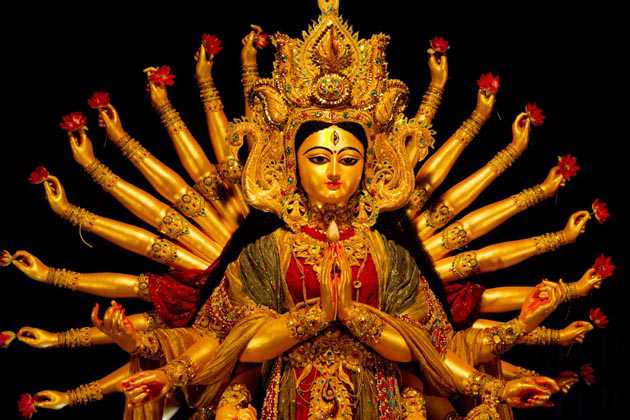
A symbolic timeline of the temple's enduring presence, devotion, and stewardship — from cosmic origin to contemporary preservation.
According to Shakta tradition, the site is sanctified by the descent of a divine fragment of Goddess Sati — eternally consecrating the land as a Shakta Pitha.
The veneration of the divine feminine in this region of Bengal is documented across centuries of Shakta literature, song-traditions and oral memory.
Local rulers, devotee communities and priestly lineages contributed to the development of the sanctum, supporting structures and ritual cycle that define the modern complex.
Bhabanipur becomes a regular destination on regional pilgrimage circuits, drawing devotees from across the eastern subcontinent during festivals and Navratri.
The temple is increasingly recognised as a Hindu heritage anchor in Bangladesh, of cultural and civilisational importance to the wider region.
A renewed stewardship effort — combining tradition, scholarship, conservation and CSR — works to preserve the temple's sanctity and continuing devotional life.
A Shakta Pitha is not simply a temple — it is, in classical understanding, a place where the Divine Mother is permanently and self-evidently present. Visiting such a site is regarded as one of the most spiritually meritorious acts in the Shakta tradition.
The language of devotion at Bhabanipur is rich with classical ritual, mantra, sacred form, and the rhythmic continuity of daily and festival worship.
Morning abhishekam, mid-day naivedya, and evening aarti structure the temple's sacred day — punctuated by the ringing of bells, the chant of mantras and the offering of flowers.
Recitations from the Devi Mahatmyam — the foundational Shakta scripture — form an integral part of major rituals, especially during Navratri.
Flowers, fruits, lamps and traditional bhog are offered to the Goddess, accompanied by the heartfelt vows of devotees who travel from near and far.
Classical Shakta mantras and stotras — including the salutations to the Mother across her many forms — resonate within the temple precincts.
Durga Puja, Navratri and Kali Puja transform the temple into a sea of devotion, music and ritual splendour.
For countless devotees, Bhabanipur is the place where personal prayers — for family, healing, protection, prosperity — are offered before the Mother.
Bengal — across its modern political divisions — has long been a heartland of Shakta devotion. Bhabanipur stands as one of its most cherished pilgrimage centres, complementing the wider network of temples, ashrams and seats of learning that shaped the region's spiritual character.
Within Bangladesh, the temple plays a quietly powerful role in the continuity of Hindu sacred life — a place of refuge, identity and shared inheritance for the devotee community.
It is also a window through which scholars, travellers and cultural practitioners encounter the depth and dignity of South Asia's Shakta tradition.
"The Pithas are where heaven leaned down to touch the earth — and never quite returned."— Shakta Tradition