By Air
Fly into Shah Amanat International Airport, Chattogram (CGP) — the nearest international gateway. From the airport, Sitakunda is approximately 50–60 minutes by road via the Chattogram–Dhaka highway.
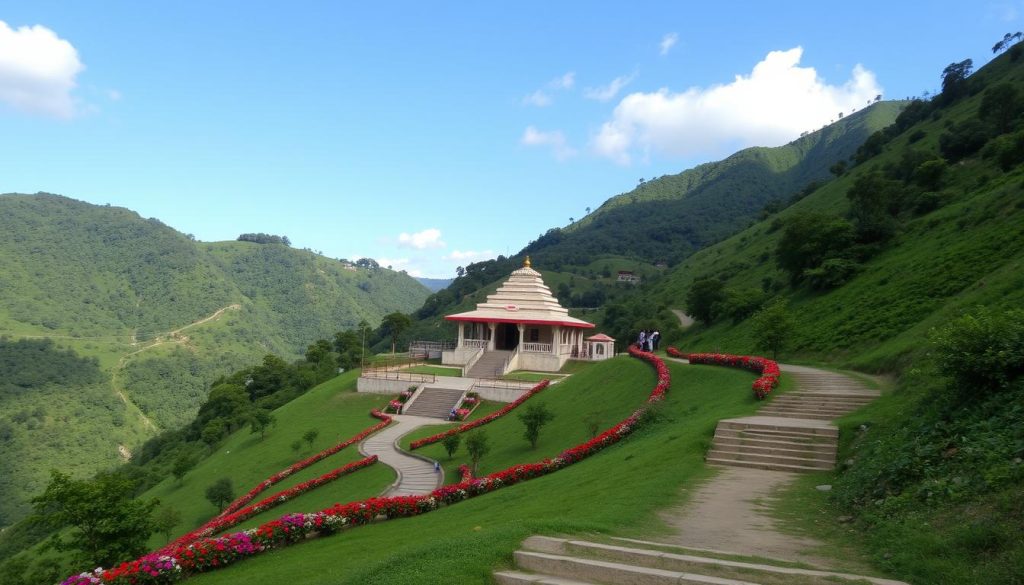
Everything a devotee needs to know — the route, the climb, the rituals, and the discipline that prepares the heart for darshan.
Sitakunda Upazila lies in the Chattogram district of Bangladesh, roughly 37 km north of Chattogram city, on the Dhaka–Chattogram highway.
Fly into Shah Amanat International Airport, Chattogram (CGP) — the nearest international gateway. From the airport, Sitakunda is approximately 50–60 minutes by road via the Chattogram–Dhaka highway.
Sitakunda Railway Station sits directly on the Dhaka–Chattogram trunk line. Frequent intercity trains, including the Mahanagar and Sonar Bangla Express, halt here. From the station the temple base is a 10-minute drive.
From Dhaka (≈250 km) the road journey takes 5–6 hours via the N1 highway. Coaches, AC bus services and private vehicles all use this route. From Chattogram (≈37 km) the journey is under an hour.
From Sitakunda Bazar, the foot of Chandranath Hill — known locally as Chandranath Pahad Toli — is a short rickshaw or auto ride. The pilgrim path begins from here.
Approximately 1,200 stone steps ascend through forested slopes, past streams and lesser shrines. The full climb takes 2–3 hours one way at a steady pilgrim pace; allow 5–6 hours total for darshan and descent.
Two principal paths converge at the summit. The traditional eastern path is the longer, gentler ascent past Vyaskunda; the steeper western path includes the Birupaksha temple and the Sahasradhara waterfall diversion.
Chandranath is a hill pilgrimage. The climb is rewarding but physically demanding — particularly in summer and during the monsoon. Prepare with respect for the temple and the body that carries you to it.
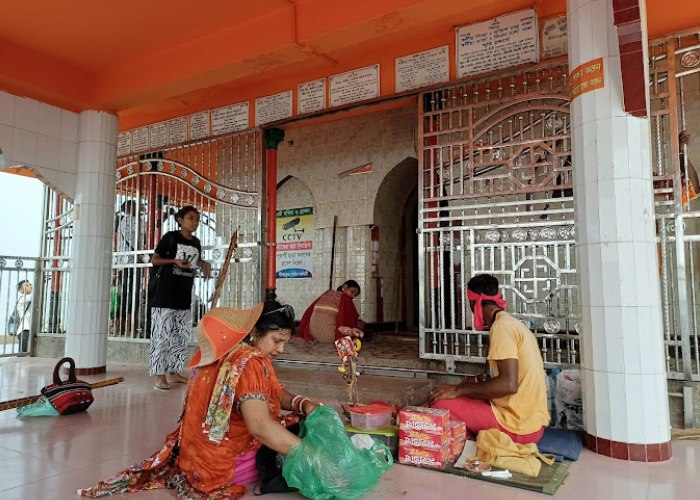
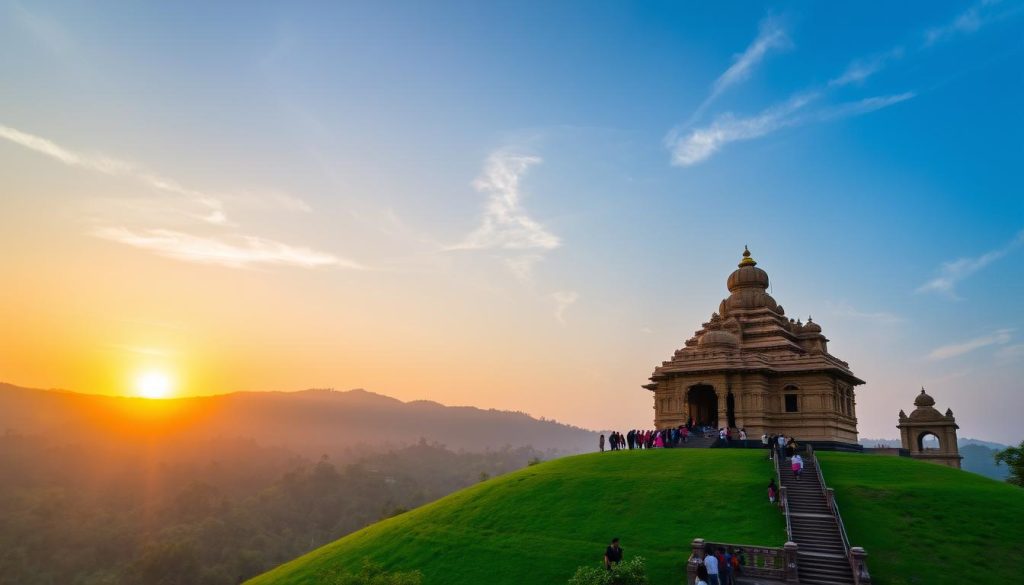
Best window: October to early March is the most favourable period — cooler temperatures, dry trails, clear panoramic skies. The Shiv Chaturdashi Mela (Phalgun, February–March) is the most spiritually charged but extremely crowded; quieter darshan is possible in November–December and again in April.
Avoid: the peak monsoon (June–August) when steps become slippery, and the high summer (April–May) when the climb in midday sun becomes physically demanding.
The climb involves sustained exertion. Pilgrims with cardiac, respiratory or knee conditions are advised to consult a physician beforehand and to undertake the climb at a measured pace, with breaks.
Begin early to avoid afternoon storms, particularly between June and September. Descend before sunset; the lower stretches of the path can become unsafe in low light.
Local police and medical post numbers are displayed at the base. Mobile signal is generally available on the ascent. The temple's volunteer corps assists pilgrims in distress.
A range of dharamshalas, guesthouses and modest hotels operate in Sitakunda Bazar. For higher-grade stays, Chattogram city — 37 km away — offers full hotel infrastructure.
Pre-arranged group visits are recommended for senior devotees, families with children and international pilgrims. The Trust facilitates introductions to vetted guides and lodging partners.
Sitakunda offers vegetarian sattvic meals at multiple bhojanalayas near the temple base — daal, rice, seasonal vegetables and traditional Bengali sweets.
"To climb Chandranath is to pray with the entire body — every step a syllable, every breath an offering."— Pilgrim tradition of Sitakunda
From group bookings and accommodation to translator-guides and Mela-week logistics — reach out to our heritage office.